
Mehndi Ceremony: Customs, Timing and Simple Planning

The mehndi ceremony is often the most colourful night of a Pakistani wedding. Henna is applied to the bride's hands and feet, the two families tease each other with songs, and trays of sweets and candles are carried in by cousins dressed in bright yellows and greens. It is a cultural custom rather than a religious one, which gives families real freedom: some hold two separate mehndis, some combine them into one joint night, and some keep it to a small henna evening at home.
What is a mehndi ceremony?
Mehndi is the Urdu word for henna. The ceremony centres on applying henna to the bride, usually in detailed patterns on her hands and feet. Around that simple act, families have built an evening of music, food and playful rivalry between the bride's and groom's sides.
In many families the formal part is called rasm-e-mehndi or rasm-e-hina. Elders of each family apply a little henna or oil to the bride's or groom's palm, offer a sweet, and give a blessing or a small gift. After that the evening becomes a celebration.
When does it happen?
The mehndi usually comes one or two nights before the baraat, after the dholki evenings and the mayun. A common sequence is:
- Dholki evenings in the week or weeks before
- Mayun, when the bride begins her pre-wedding seclusion in many families
- Mehndi, a night or two before the baraat
- Baraat, with the nikah and rukhsati
- Walima, hosted by the groom's family
If you are planning the earlier evenings too, our guide to the dholki explains how to keep those gatherings small, and our post on the walima covers the final meal.
Who hosts the mehndi?
Traditionally each family holds its own mehndi:
- The bride's mehndi is hosted by her family. The groom's family arrives in a lively procession carrying henna on decorated trays, along with candles, sweets and sometimes clothes for the bride.
- The groom's mehndi is hosted by his family, and the bride's side visits in the same way, bringing henna for the groom.
In big cities, joint mehndis are now common: one venue, one evening, both families together, with the costs shared. This halves the number of functions and is often much easier for guests travelling from other cities or abroad.
Regional customs
Punjabi families
The Punjabi mehndi is famous for its energy. Both sides prepare dances and songs, and mock competitions between the bride's and groom's cousins are part of the fun. Yellow, orange and green clothing is common, and the bride often sits on a decorated swing or low seat.
Urdu-speaking families in Karachi
In many Karachi families the rasm-e-hina is carried out carefully, with elders applying henna in turn, followed by songs and dinner. Families in Karachi often hold the mehndi on a weeknight to manage venue costs and guest travel.
Sindhi families
Henna is applied to the bride in the days before the wedding, often alongside other Sindhi customs carried out by the women of the family, with songs in Sindhi.
Pashtun families
In many Pashtun families the henna night is called nakreeza. Henna is applied to the bride, and celebrations often include traditional drumming and dance, with men's and women's gatherings held separately in some families.
Kashmiri families
Henna nights often bring women of the extended family together for songs and henna application at home, with food at the centre of the evening.
These are broad patterns. Many families now mix customs from both sides, and our rishta by city pages note how families in different areas approach weddings and rishtas.
Planning a mehndi simply
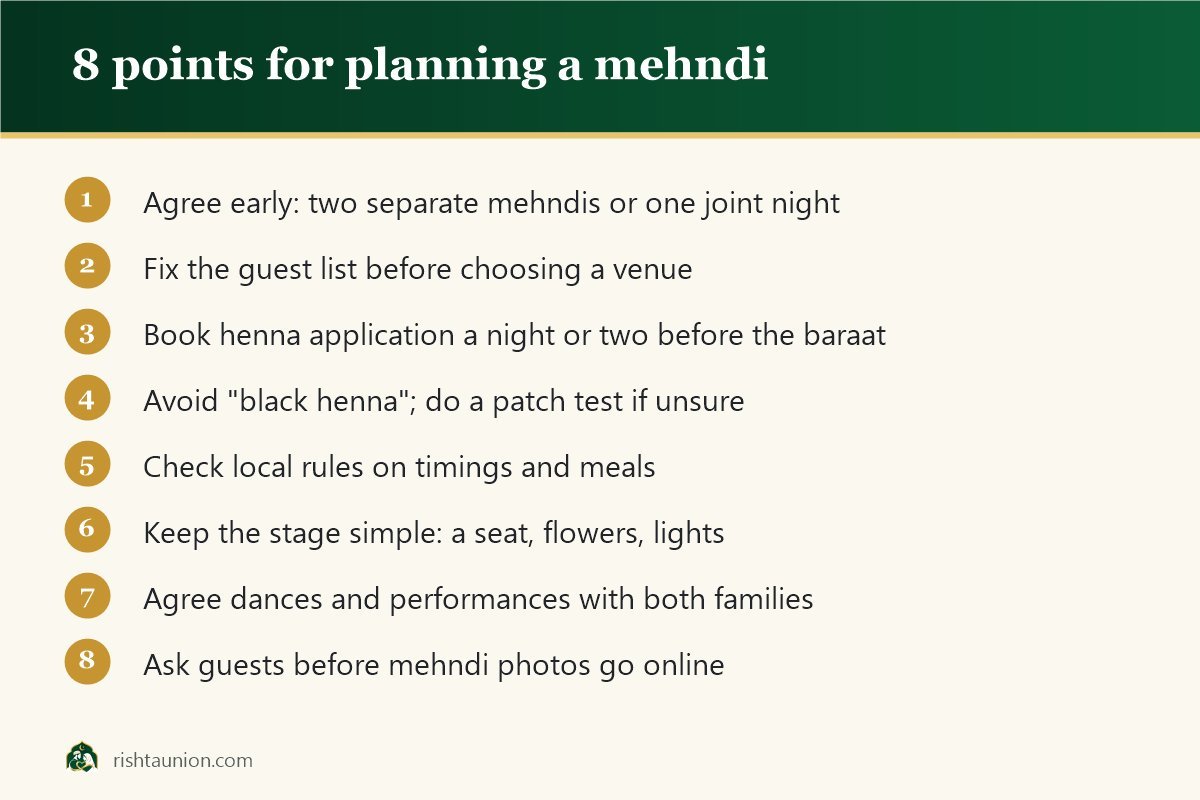
Decide: two mehndis or one?
Talk to the other family early. A joint mehndi is cheaper and simpler; separate mehndis keep tradition. Neither is wrong, but agreeing early prevents misunderstandings and duplicated bookings.
Fix the guest list before the venue
The mehndi guest list can be smaller than the baraat. Close family and friends are enough for a memorable evening, and a home or rooftop works well for smaller numbers.
Book henna application in good time
Fresh henna darkens over a day or two, so many brides have it applied a night or two before the baraat. Whoever applies it, a relative or a henna artist, book early in wedding season and agree the design and time in advance.
Avoid "black henna"
Natural henna leaves an orange to reddish-brown stain. Products sold as "black henna" may contain chemical dyes that can cause skin reactions. If in doubt, do a small patch test a few days before.
Check local rules on timings and meals
Some provinces have rules on how late wedding functions may run and what can be served, including Punjab under its Marriage Functions Act 2016. Details and enforcement change, so check with your venue and local administration before you plan the menu and end time.
Keep the stage simple
A low seat, flowers, and a few lights look lovely in photos. Elaborate stage designs are rarely remembered as much as the people.
Plan the dances with everyone in mind
Not every relative is comfortable with dancing. Agree within both families what kind of performances are welcome, so elders and guests are comfortable.
Ask before photos go online
Many women prefer their mehndi photos to stay private. Let guests know your wishes before the evening starts.
Frequently asked questions
Is the mehndi ceremony required in Islam?
No. It is a cultural tradition. Applying henna is common among Muslim women, but the ceremony itself is optional, and many families simplify or skip it.
How many days before the wedding is the mehndi?
Usually one or two nights before the baraat. Some families combine it with the mayun or hold it earlier when guests are travelling.
Can both families hold one joint mehndi?
Yes. Joint mehndis are increasingly common, especially in cities. Agree costs and the programme in advance so both sides feel included.
Does the groom wear henna?
In many families the groom receives only a small token of henna on his palm or finger during the rasm. Customs vary, and some grooms skip it.
If you are still searching for the right person, you can create a free profile on Rishta Union and save the mehndi planning for later.
Keep reading

Baraat: What Happens on the Day and How to Plan It
What the baraat is, the order of the day from arrival to rukhsati, regional customs in Pakistan, and practical tips on guests, timing and the bride's...
Read article
Marriage Registration in Pakistan: Registering Your Nikah at the Union Council
How marriage registration in Pakistan works: the law, the Nikah Registrar's duty, what happens at the union council, and fixing late or missing regist...
Read article
Nikah Dress Ideas: Colours, Fabrics and Styles for Bride, Groom and Family
Nikah dress ideas for the bride, groom and family: colours, fabrics and styles that suit a Pakistani nikah, plus modest choices and ways to keep the c...
Read article